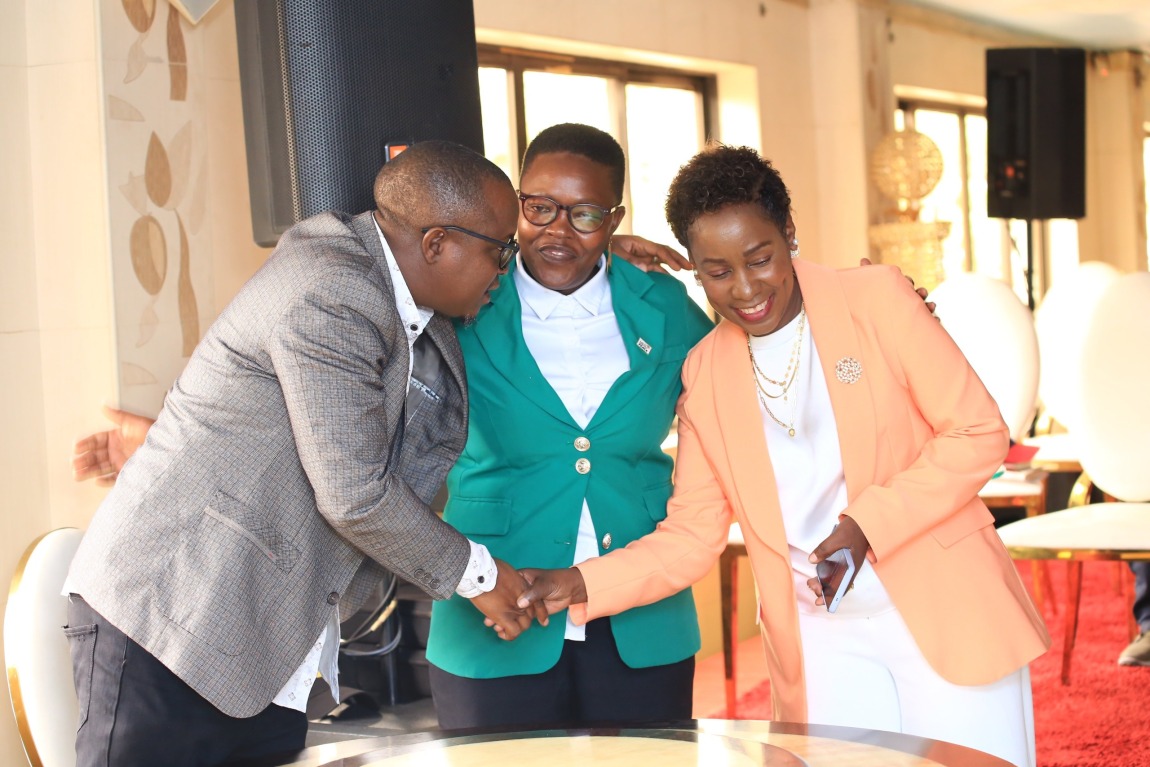
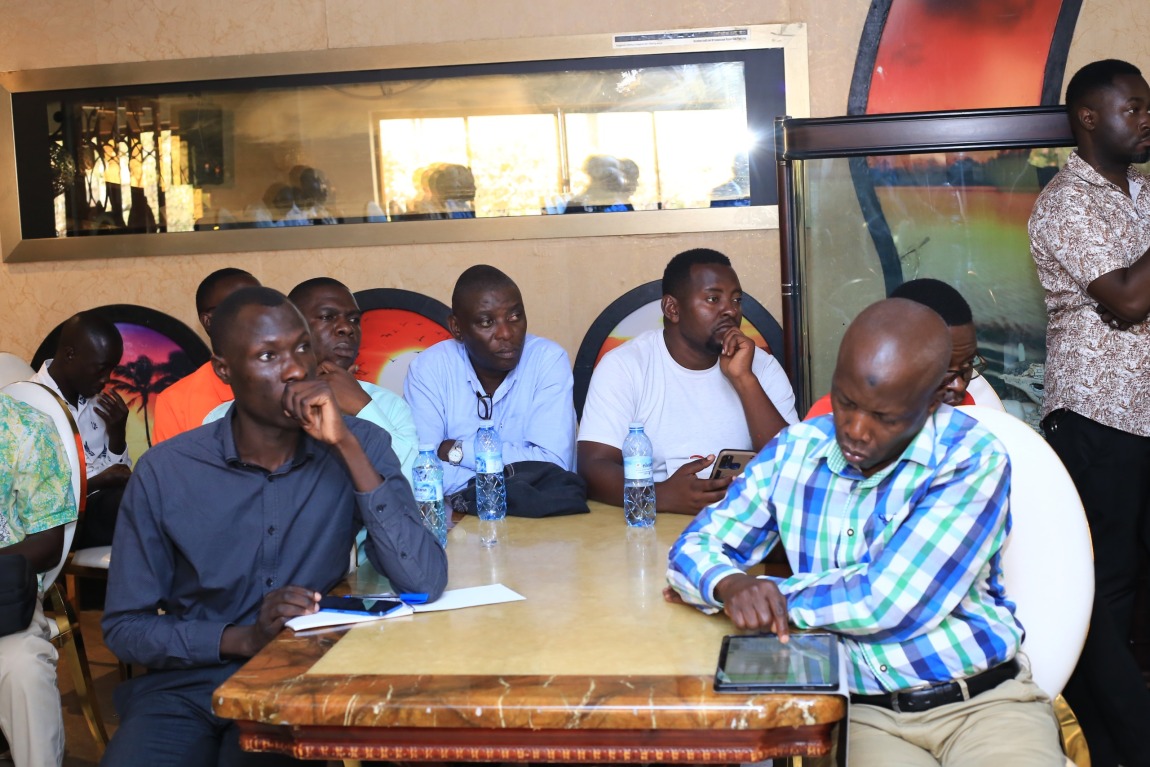
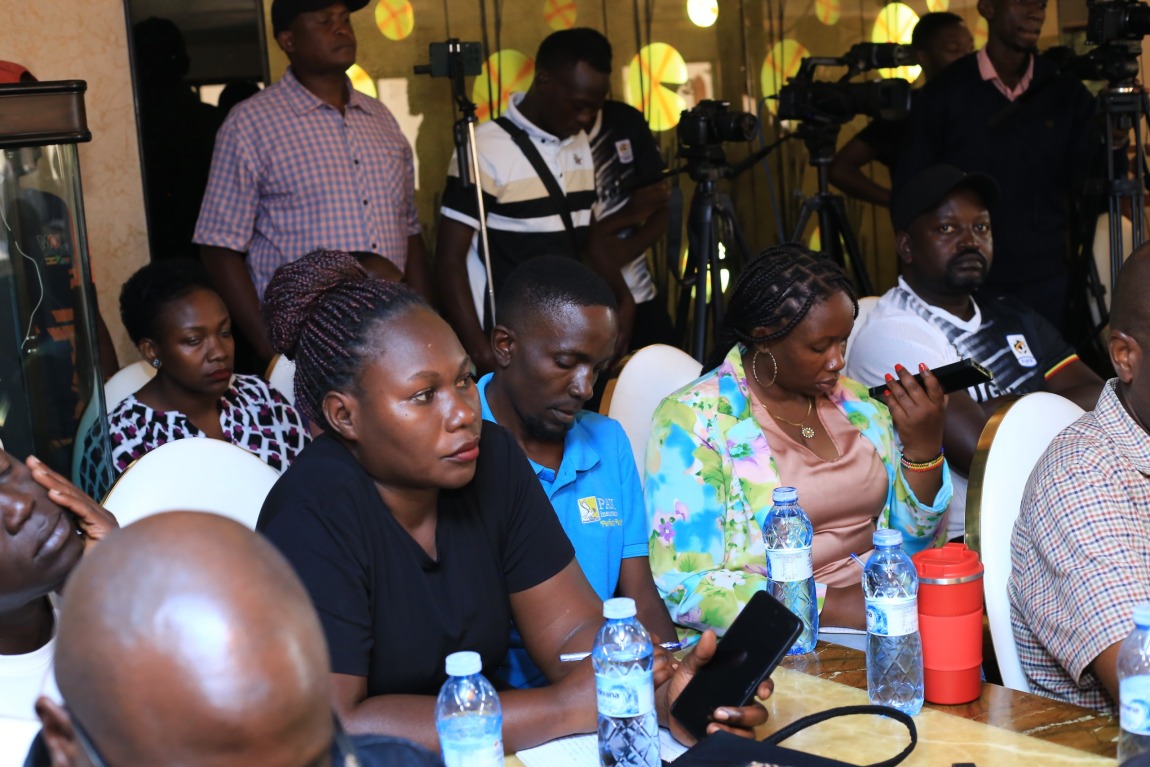
The Federation of Uganda Football Associations (FUFA) hereby provides explanation of what happened when FUFA presented its petition to the committee of Education and Sports on 27th January 2026.
The year 2025 stands as a defining chapter in the history of Ugandan football. Across governance, international competition, youth and schools football, domestic leagues, technical leadership, officiating, awards and infrastructure, the Federation of Uganda Football Associations recorded milestones that strengthened Uganda’s position on the continental and global stage.
Uganda co-hosts CHAN 2024
Uganda successfully co-hosted the TotalEnergies African Nations Championship 2024 alongside Kenya and Tanzania under the Pamoja East Africa framework. The tournament marked a major organisational milestone for FUFA and demonstrated the country’s readiness to host large-scale continental competitions.
The championship was characterised by strong fan engagement, with Ugandan supporters turning up in large numbers and creating a vibrant atmosphere that showcased the nation’s football passion across all host venues.
Historic CHAN quarterfinal qualification
The Uganda Cranes delivered a historic campaign at CHAN 2024 by qualifying for the quarterfinals for the first time. The achievement represented a breakthrough for the senior national team in the competition and underlined the progress of locally based players.
Uganda Cranes at AFCON 2025
The Uganda Cranes returned to Africa’s biggest football stage by qualifying for the TotalEnergies Africa Cup of Nations 2025 in Morocco. The team competed with resilience in a challenging group and gained valuable continental experience.
FIFA World Cup qualification campaign
In the FIFA World Cup qualification campaign, the Uganda Cranes finished as group runners-up, reflecting competitive consistency and continued growth against strong opposition.
Historic year for youth football
Youth football reached unprecedented heights in 2025. The Uganda Cubs qualified for the FIFA U17 World Cup and progressed to the round of 16, marking one of the most significant achievements in the country’s youth football history.
The campaign was led by head coach Brian Ssenyondo, who became the first coach to guide Uganda to a FIFA World Cup, a landmark moment in the nation’s football journey.
In addition, Uganda secured qualification for the CAF U17 Africa Cup of Nations 2026 under the guidance of Laryea Kingston, the Men’s Youth National Teams Head Coach, reinforcing sustained progress in youth development pathways.
CAF African Schools Football Championship
Uganda played a central role in the CAF African Schools Football Championship in 2025, both as host and competitor.
Uganda hosted the CECAFA Zonal Qualifiers at St Mary’s Stadium, Kitende, where the Uganda Boys U15 team were crowned champions after defeating Ethiopia on penalties and qualified for the continental finals. The Uganda Girls U15 team finished third after defeating Burundi in the bronze medal playoff.
At the continental finals in Accra, St Noa Girls School Zzana finished runners-up and won the silver medal, while St Mary’s Kitende finished fourth in the boys’ category. Ugandan players also earned multiple individual awards, highlighting the strength of schools football development.
FUFA leadership and technical direction
The year reinforced stability in football governance as FUFA President Hon. Eng. Moses Magogo was re-elected for another term, ensuring continuity in leadership and strategic direction.
At senior technical level, the contract of Uganda Cranes head coach Paul Joseph Put was renewed, reflecting confidence in his leadership and technical vision. At youth level, FUFA continued to strengthen its technical structure under Laryea Kingston as Men’s Youth National Teams Head Coach.
Continental recognition
Uganda received major continental recognition in 2025 as a Ugandan referee was named CAF Best Female Referee, highlighting the country’s growing influence in football officiating.
At institutional level, H.E. Yoweri Kaguta Museveni, President of the Republic of Uganda, received the CAF President’s Award for Heads of State, recognising his support towards football development, infrastructure growth and the successful hosting of continental competitions.
Domestic football
FUFA successfully organised competitive seasons across all domestic competitions in 2025.
In men’s football, Vipers SC were crowned champions of the Uganda Premier League and the Uganda Cup, Calvary FC won the FUFA Big League, and SC Villa claimed the FUFA Super 8.
In women’s football, Kampala Queens FC won the FUFA Women Super League, Amus College WFC lifted the FUFA Women Cup, and St Noa WFC emerged champions of the FUFA Women Elite League.
In youth and schools football, Vipers SC Junior Team won the FUFA Juniors League, St Mary’s Primary School won the boys’ FUFA Odilo Primary Schools Championship, and Oasis Primary School won the girls’ category.
In indoor and sand football, Mengo Futsal Club were crowned Futsal Super League champions, while Kampala City Beach Soccer Club won the FUFA Beach Soccer League.
Infrastructure development
Significant progress was registered in football infrastructure development during the year.
The Hoima City Stadium project was officially launched by H.E. Yoweri Kaguta Museveni. Part of the land the stadium sits on was donated to FUFA by the Rujumba family then later transferred to Government.
The official opening of FUFA Stadium Kadiba marked another major milestone, providing a modern venue for national teams, competitions and development programmes.
Looking ahead
As 2025 concluded, FUFA emerged stronger institutionally and competitively. The achievements recorded during the year have laid firm foundations for sustained growth, with focus remaining on youth and schools football, domestic competitions, governance excellence, infrastructure development and international competitiveness.
This is to inform the stakeholders that the FUFA Executive Committee has appointed and named the following persons to serve on the various mentioned committees for the period of two years 2025-2027 in compliance with the FUFA Statutes.
These committees start duty with immediate effect.
FUFA is pleased to partner with the U.S. Mission Kampala in the lead-up to the 2026 FIFA World Cup. This collaboration is a key aspect of football diplomacy, aligning with America’s 250th independence celebrations on 4th July 2026.
The partnership strengthens Uganda-US strategic relations, fostering mutual development and creating opportunities for technical growth, cultural exchange, and sustainable football development.
A FUFA delegation, led by Exco Member Ronnie Kalema, CEO Edgar Watson, and Competitions Director Hajati Aisha Nalule, held talks with the US Mission Kampala’s Education & Culture Attaché Lana Surface and other officials.
The Confederation of African Football (CAF) President’s Outstanding Achievement Award has been bestowed upon the Presidents of Uganda, Kenya and Tanzania, in recognition of their outstanding contributions to African football.
Uganda’s President Yoweri Museveni, Kenya’s President William Ruto and Tanzania’s President Samia Suluhu Hassan were honored during the 2025 CAF Awards ceremony in Rabat, Morocco.
Each leader received a CAF Awards plaque for strengthening football structures and supporting major continental sporting programs.
CAF President Dr. Patrice Motsepe commended the East African leaders for their exceptional commitment to advancing football development on the continent.
This prestigious award highlights President Museveni’s dedication to Ugandan and African football, infrastructural development, inspiring a new generation of players and fans!
The three East African countries recently hosted a successful CHAN 2024 tournament under the Pamoja Umbrella and preparations for the AFCON 2027 have taken shape as well.
At the event, referee Shamirah Nabadda emerged as the Referee of the Year.
The FUFA 1st Vice President Justus Mugisha attended the event.
Cricket Uganda (CU) officials, led by Chairman Jackson Kavuma, CEO Evelyn Kabongerwa and Head of Public Relations (PRO) Innocent Ndawula, paid a special visit to FUFA House.
They were warmly received by FUFA President Hon. Magogo Moses Hassim.
The Chairman Cricket Uganda Kavuma expressed appreciation for FUFA’s leadership, stating; ‘We value FUFA’s leadership in sports administration and appreciate the lessons and best practices we can learn from your strategic approach. This meeting will help us forge a working relationship and explore collaboration opportunities to enhance sports development in Uganda.,
FUFA President Hon. Magogo highlighted that the institution welcomes partnerships and he is happy to have received a powerful delegation from Cricket Uganda.
The delegation also toured the FUFA Complex that houses Secretariat offices, 102 FUFA fm, FUFA Tv studios and later visited the FUFA Stadium Kadiba.
The officials were presented with souvenirs, including customised Uganda Cranes jerseys and books celebrating 100 years of FUFA.
The FUFA President has assured stakeholders of FUFA’s commitment to improving the Uganda Premier League (UPL) during the 12th Annual General Meeting (AGM) of FUFA Super League Limited (FSLL) held in Jinja. Addressing board members, clubs and officials, he emphasised the importance of governance, financial sustainability and reforms as the League’s flagship competition.
Role of FUFA Super League Limited
The President reiterated FUFA’s position in delegating the League’s management to FSLL. ‘FUFA Super League Limited is a company that FUFA has delegated the mandate to run the Uganda Premier League. The Uganda Premier League is a competition of FUFA by statute, but in the interest of improving the game, the Executive Committee decided to delegate this role to FSLL,’ he explained.
He thanked the Board for stabilising operations after years of internal disagreements. ‘Before this particular Board, there was a lot of suspicion, discontent and conflict that did not improve the League. I want to thank the Chairman and the Board for the work you have done to stabilise the ship,’ he said.
Acknowledgement of Stakeholders
The President paid tribute to FUFA’s 3rd Vice President, Owek. Florence Nakiwala Kiyingi, for bridging the Federation and the League in long-term planning. He also applauded the UPL Secretariat for its commitment despite challenges, as well as the clubs for their sacrifice. ‘Without the clubs, and many times without you digging into your individual pockets, we would not have the League. You volunteer money, you volunteer time and you volunteer yourselves for the game,’ he noted.
He welcomed newly promoted clubs Entebbe UPPC FC, Calvary FC and Buhimba United Saints FC into the UPL and praised BUL FC for hosting this year’s AGM, noting the importance of rotation.
Governance and Club Licensing
Emphasising governance, the President said that AGMs must become a standard practice at club level. ‘From the FUFA point of view, going forward it is going to be a mandatory Club Licensing requirement that there must be an AGM at each club, even if it is a privately-owned club. Owners must meet the board or executive to discuss the statutory agenda with FUFA present. If the meeting does not take place, then you may not be given a licence to play in the League,’ he stressed.
Football in a Time of Opportunity
Reflecting on Uganda’s football progress, he described the present period as one of the best in history. He attributed this to peace, improved infrastructure and supportive legislation. ‘Sincerely speaking, we are living in a peaceful country. We can travel from Calvary to Buhimba and Mbarara without anybody stopping you. We need to appreciate His Excellency President Yoweri Kaguta Museveni because there is no way talent can be harnessed if wars are going on,’ he remarked.
He pointed to the new National Sports Act, increased government funding for national teams and major investments in infrastructure, including international stadiums in Hoima and Lira, as opportunities that the game must seize.
Challenges of Funding
Despite the progress, he identified financing as the biggest challenge for the UPL. ‘Members, our biggest problem today in the Uganda Premier League is money. Almost all the funds we use are coming from institutions or private individuals. This is not sustainable. In such circumstances, you cannot enforce standards because you are asking someone to spend personal money on pitches or player salaries. We need to address the issue of money,’ he said.
Technical Master Plan and Player Development
The President outlined FUFA’s Technical Master Plan, which focuses on talent identification, development, professional clubs and life after playing. He stressed that elite players must be developed at clubs and warned against the constant loss of stars to foreign leagues. ‘When we lose our best players, the League gets depleted of stars, and it becomes very difficult to sell. We need money to make money,’ he stated.
FUFA’s Position in the League
He rejected suggestions that FUFA had abandoned or interfered with the League. ‘FUFA Super League Limited is a company owned by 17 shareholders. Sixteen are clubs and the seventeenth is FUFA. We are shareholders in this company and cannot be intruders. The UPL is our flagship brand, and we cannot abandon it,’ he affirmed.
Reforms and Investment
Turning to reforms, the President called for unity. ‘As a Federation, we believe you cannot do the same thing the same way and expect different results. We need all 16 clubs to support the reforms and to be ambassadors of change,’ he said.
He revealed that FUFA has mobilised resources for reforms, including a direct cash injection of over 950,000 US dollars. ‘This money could have gone into other projects, including Kadiba Stadium, but we chose to invest it in the League to generate more revenue. It is bigger than any other sponsorship and comes from FUFA, not government,’ he clarified.
Further commitments include investing in new UPL offices worth 300 to 400 million shillings, introducing technical officers to collect match data, and strengthening the Secretariat with additional professional staff.
Call for Unity and Patience
In conclusion, the President urged stakeholders to embrace change despite uncertainties. ‘Let us not run away from friendly sources like FUFA that has come to ensure that we improve the situation. Negativity in some sections of fans is created by us. We must educate our fans that this format ensures fairness and competition,’ he said.
‘Some people have said these reforms will not work. Nobody has the authority to say so before they are tried. Let us give them a chance. We believe that we shall be vindicated by creating a stronger product that generates more revenue for our clubs,’ he concluded.
The FUFA President has engaged members of the sports media in a special session designed to strengthen relations and explain ongoing reforms within Ugandan football. He clarified from the outset that the gathering was not a conventional press conference but an opportunity for dialogue.
‘This is not a press conference. A press conference is a one-way communication. This is an engagement where we talk to each other and get to know one another better,’ he remarked while also appreciating the Uganda Sports Press Association and its members for their cooperation.
Strengthening Relations with the Media
The President emphasised the role of the media in shaping football. ‘Our mandate as FUFA is to think for the game through our 34 members, and your mandate is to communicate those ideas to the public. You are free to form independent opinions, which we respect, but differences in opinion should not stop us from working together.’
Institutional Growth and Vision
Reflecting on the Federation’s journey since 2013, the President pointed to significant progress. ‘We have moved from a turnover of four billion to forty billion shillings. We have recruited professionals to strengthen our human resource and built strong partnerships with government, sponsors, FIFA and the media.’
He reaffirmed FUFA’s long-term vision, saying: ‘Our vision is to be the number one football nation in Africa on and off the pitch.’ He noted that while a UEFA assessment had praised FUFA’s governance, it also identified gaps in player development and competitions.
Technical Master Plan and Talent Pathways
To address those gaps, the Federation is implementing a Technical Master Plan. ‘The plan is anchored on four pillars,’ he explained. ‘We must identify talent through mass football. We must create proper pathways, including the National Football Academy. We must reorganise club football to retain players who risk being lost at 18 or 19. And finally, we must reabsorb our retired players and referees into the game.’
League and Competition Reforms
Among the headline reforms is a restructuring of the Uganda Premier League into a three-round format. ‘In round one, all sixteen clubs will play each other once. In round two, the top eight will play in one group and the bottom eight in another. In round three, the top six will fight for the championship, the bottom six will battle relegation, and the middle four will face each other,’ he said.
‘This system will make every game count. It will also ensure that big fixtures such as KCCA against Vipers happen more often, which is what fans and sponsors want. Events create value, and without value football cannot generate money.’
Refereeing, Players and Clubs
The President also announced major investment in refereeing and players’ welfare. ‘We have reduced referees from 100 to 50, and 13 of them are already FIFA-certified. Their welfare is now a priority with improved allowances, medical insurance and modern equipment,’ he revealed.
On players, he said: ‘Every match will now have a Man of the Match reward. Winning teams will receive locker room bonuses which increase each round. A player can earn up to 650,000 shillings in round three.’
He confirmed that each club will receive 80 million shillings in direct financial support alongside prize money worth 532 million shillings. ‘We have also set aside a budget to promote the League through media and marketing,’ he added.
Confidence in Delivery
While recognising that change is often met with doubt, the President assured stakeholders of FUFA’s track record. ‘Many people doubted us when we started FUFA Radio and FUFA TV or when we went for AFCON hosting rights. Yet we delivered. We shall also deliver on these reforms,’ he said.
Call to the Media
In his closing remarks, the President appealed to the media to remain professional and supportive. ‘Report accurately and separate fact from opinion. Football should never be personalised. Let us unite as Ugandans to grow this game. You create the stars and without stars there is no football product.’
The whole country is excited about today’s match with Senegal in the ongoing CHAN tournament at Mandela National Stadium Namboole. The journey for the Uganda Cranes in this tournament has been well documented with results that have left many fans in high spirits. The opening fixture was not the best of the results for the football fans but the players regrouped and returned with seven points in three games to top group C and even qualify for the quarterfinals for the first time since the inception of the CHAN tournament.
The FUFA President Hon. Magogo Moses Hassim in his capacity as leader of football business in Uganda, took time to address key issues about the Uganda Cranes, status of team in camp and its customised hotel designed specifically for the team to suit a player’s environment while in camp. In his opening remarks of the media address held at FUFA Hotel, Kisaasi, the FUFA President thanked the Members of the Executive Committee who attended the event, media and the fans fr supporting the Uganda Cranes.
His addressed hinged on;
On Fans and Support
This is a national team and we are all Ugandans. I am very certain that what is not about to change is your nationalism. We did not do so well in the first game, but the fans came back for the second game and it was full house. It was a point of confidence in the national team. We came back for the third game and it was still full house. I am very certain that our qualification out of the group stage is purely because of the support we get at home. The fans have been amazing.
Thank you so much. Our fans, to be more specific, Ugandans and everybody else who has made an effort to ensure that the boys feel at home. I also thank, more specifically, the residents of this area (Kisaasi) who have always shown the team a lot of love.
The team now needs more support. We have gone through a phase (groups) and we are now in the knockout stage, where we have a game against Senegal this Saturday and it is very important that the boys are loved.
On Objectives and readiness
We have achieved our first objective, which was getting out of the group stages. It was our primary objective, because it was a monkey on our back. However, we want to go all the way.
The boys are in jovial mood, they are feeling happy, because those of you in the media who have joined us for lunch, you have dinned with them, and you can testify that the boys are happy, and they are willing to go all the way.
On Player Development
I will also take this moment to explain a few things that that player we see in the stadium, he did not start playing football yesterday. That player has been developed for the last 15 years.
Throughout the 15 years, he has gone through so many hands. Most of these hands are private hands.
Because it is such a tedious, long process. You will see Allan Okello today, but he was a player identified by FUFA Junior League that was started in 2015. He went through the structures. So today we are celebrating what he is doing. But he has been going through a process.
The final bit is motivation and logistics. Normally people want to commentate about the motivation. They want to commentate about logistics. But if you didn’t identify the right talent, if you did not develop the talent which you identified, however much you motivate, however much you provide logistics, they will never give you the results.
On Club Football
Because a doctor is developed from a school. Now a professional footballer must also be developed from a football school. Until we appreciate that we need proper academies.
If KCCA, SC Villa do not have the money, if these players we are talking about today do not eat, do not train properly, do not get paid well at clubs, you do not expect a miracle at the national team.
So as FUFA, our next focus is going to concentrate on how we package club football. Because the Ugandans have shown us that you can consume football on a daily. For the last two weeks, tickets have been selling out.
Today, the FUFA President Hon. Magogo Moses Hassim met with the Uganda Premier League Board, Club Chairpersons and Chief Executive Officers at the FUFA Complex Mengo to strategise ahead of the 2025/2026 #StarTimesUPL season. pic.twitter.com/YuCOUKqyLE
Let us support our clubs. Let it be an obligation that every Ugandan has a local football club, he can identify with.
On Team Hotel
I also want to talk about one of the issues that has also been prevalent in the media, it is about the team hotel. It is true that as a Federation, we have seen some of this feedback from the public. But I want to inform the general public that some of the publications that are being made are false.
A football hotel is customised. It is not a general hotel where you want and whatever you want.
This exclusivity gives us a way of preparing our own food our own way. About the hotel, it has its own gym also custom-made for football.
As we speak right now, this facility, we are also developing the outdoor arena. And if you look through the windows, there’s a pitch which is being developed so that this hotel you can even be able to do a night training.
CAF has to come and look at the amenities and this hotel was approved by CAF. According to the standards of the competition, who is more authoritative? Is it you, the competitor, or CAF?
On Long-Term Plans
Our long-term plan is developing the football stadium at Kariba, which is undergoing development. It has a first-class unit which has accommodation, which has all the amenities that we are talking about here at this moment. Eventually, that will be the home of the national team.
FUFA Hosts KCCA officials for inspection of Kadiba stadium
The Federation of Uganda Football Associations (FUFA) has today hosted officials from the Kampala Capital City Authority (KCCA) @KCCAUG, led by Deputy Executive Director Benon Moses Kigenyi, for an inspection of the… pic.twitter.com/3FDCuQCmDy
But that is a long-term process. Right now, we have competitions we are undertaking and we cannot stop doing that.
So there is no benefit at all for any people. In any case, I can tell you that this is one of the hotels where CAF paid the receipts, $120 per head full board.
On Infrastructure
I want to conclude by saying that this location we are talking about, is a necessity.
We would like to call upon the authority, KCCA, to improve the road network. That cannot be our responsibility as a federation. But we have been engaged with the authorities at KCCA.
Conclusion
Let us concentrate on our next engagement, and that is Senegal. How will we go to the stadium? How will we be a team?
So, I want to end my address by saying, let us support them. All they need right now is our support. All they need right now is our support to fill the stadium.
All they need right now is to show them that they’re doing this for all of us. This is the most important thing right now.
We are pleased to announce that Mr. Bashir Mutyaba has been appointed as the new Football Development Director of the Federation of Uganda Football Associations (FUFA), effective 1st August 2025. This appointment follows the recruitment of Mr. Ali Mwebe by FIFA as a Regional Technical Consultant.
Mr. Mutyaba, previously a member of FUFA’s Development Department, has been instrumental in youth football development and is well positioned to drive continuity and adoption of ongoing FUFA, CAF and FIFA programmes.
For all correspondence and collaboration, please reach out to:
The Federation of Uganda Football Associations (FUFA) continues to strengthen its governance frameworks with the successful hosting of an orientation meeting for its newly constituted judicial bodies. Held on Monday, 28th July 2025, at the FUFA Complex in Mengo, the meeting served as a key milestone in ushering in a new chapter of football justice in Uganda.
The members attending this orientation were recently appointed or reappointed during the 101st FUFA Annual General Assembly (AGA), which took place in Hoima on 5th July 2025. Their official onboarding signals the start of their term across the various judicial arms of the federation. The meeting was chaired by the FUFA President Hon Magogo Moses Hassim, and attended by senior FUFA officials including Chief Executive Officer Edgar Watson, the Head of Legal, Denis Lukambi among others
FUFA, in line with international football governance principles, operates a strong and independent judicial structure that helps regulate conduct, resolve disputes, and enforce discipline in accordance with its statutes and the regulatory frameworks set by CAF and FIFA. These judicial bodies are entrusted with making key decisions on disciplinary matters, ethical violations, appeals, player and club disputes, and contractual issues.
The orientation was designed to bring new committee members up to speed with FUFA’s legal and regulatory environment, clarify the mandate of each judicial body, and emphasize the need for professionalism, impartiality, and integrity. Members were taken through FUFA’s judicial architecture, case management procedures, and the expected standards of conduct for office bearers. The meeting also served as a platform for reflection on past lessons and the setting of expectations for the years ahead.
The judicial bodies under FUFA include:
The FUFA Ethics and Disciplinary Committee, now led by Chairman Charles Kalule, which is responsible for investigating and ruling on breaches of the FUFA Disciplinary Code. This includes matters related to misconduct on and off the field, match-fixing, and unsporting behavior.
The FUFA Appeals Committee, chaired by Counsel Tony Mawejje, which provides a second level of judicial scrutiny by hearing appeals against decisions made by the Disciplinary and other FUFA Committees.
The FUFA Investigatory Chamber of the Ethics Committee, now chaired by Counsel Sarah Mwebesa, which acts as the initial investigating authority on matters related to ethical violations. Its findings guide the adjudicatory chamber in rendering verdicts.
The FUFA Dispute Resolution Chamber, under the leadership of Counsel George Musisi, which handles employment-related and contractual disputes between players, coaches, clubs, and other football stakeholders.
The reconstitution of these committees follows a structured and democratic process embedded in the FUFA Statutes and ensures that the Federation maintains its compliance with international best practices in sports law and governance.
Throughout the orientation, emphasis was placed on the need for objectivity, diligence, and legal rigor in managing cases, given the rising complexity and visibility of football matters both locally and internationally. Members were reminded of the critical role they play not only in enforcing rules but also in building trust and credibility within Uganda’s football community.
The FUFA Legal Department provided an overview of the major statutes, codes of conduct, and operational guidelines that underpin the functioning of the committees. This included an in-depth look at the FUFA Disciplinary Code, the FUFA Ethics Code, and the procedural rules guiding hearings and decisions.
The orientation also aligns with FUFA’s broader strategic goal of professionalizing football administration at all levels. By investing in the training, induction, and continuous development of its judicial officers, FUFA is laying a strong foundation for fair play, legal integrity, and institutional trust—key ingredients for sustainable football development.
With their mandates now formally set in motion, the members of FUFA’s judicial bodies are expected to bring both expertise and character to their duties. Whether handling disciplinary issues arising from league matches, contractual disputes in the player transfer market, or broader ethical concerns in football administration, their decisions will shape the direction and image of Ugandan football in the years ahead.
The Federation of Uganda Football Associations (FUFA) is inviting submissions of proposals aimed at improving regulations for the upcoming 2025/26 season from the stakeholders in Ugandan football.
According to an official communication issued by FUFA Chief Executive Officer Edgar Watson Suubi, the federation is seeking contributions that will enhance the FUFA Competitions Rules as well as the Regulations on the Status and Transfer of Players.
Submissions are to be sent to rules@fufauganda.com or delivered directly to the FUFA Secretariat no later than Thursday, 31st July 2025 at 17:00 hours.
The FUFA President, Hon. Magogo Moses Hassim, made his maiden media appearance since his re-election last Saturday in Hoima on NTV’s ‘Sports Knights’ on July 7, 2025. Hosted by Mabel Kebirungi, with Ismail Dakhaba Kigongo, Andrew Mwanguhya and Rhema Daniels, the discussion covered Magogo’s football journey, delegate roles, FUFA’s stakeholder relationships, the future of the game and challenges as outlined in his manifesto. Below are excerpts from the show.
FUFA President on the Manifesto 2025-2029 under the theme: ‘The Game: Past, Current and Future’.
The booklet, which doubles as a manifesto, is a reflection on the past, present and future; both for me personally and for the institution. FUFA now operates a budget of 40 billion shillings and to date, there have been no scandals related to financial mismanagement.
FUFA President on the delegates system
Thank you for the Congratulations regarding the national teams and I truly appreciate it. Regarding the perception of FUFA as a closed group, let me clarify that to become a delegate, one must own or belong to a football club. This so-called ‘closed clan’ actually has a very clear point of entry.
Our delegates are elected from over 1,000 clubs across the country, with each investing a minimum of ten (10) million shillings annually to run their clubs. When I became President, regional funding was a mere One (1) million Uganda shillings; however, we have increased that to 25 million Uganda shillings per region.
The FUFA Statutes mirror those of FIFA. This governance structure was not invented by Magogo. I have also had proposals turned down within this structure. We have made deliberate efforts to engage stakeholders, including visits to all the eight (8) FUFA football regions.
Above: Stakeholder engagement in Kampala Central DFA in 2024
There is a claim that we “hide” delegates. In truth, there are 34 FUFA members. If someone genuinely wants to find out who the delegates are, they can.
Engagement with delegates is ongoing. Naturally, this familiarity gives one an advantage if they later decide to run for FUFA President.
FUFA President on the sporting side and League development
On the sporting front, there are undeniable struggles. Success on the pitch attracts business interest. Unfortunately, we are currently unable to fully finance the league, it urgently needs increased funding.
— StarTimes Uganda Premier League (@UPL) May 25, 2025
We have made progress such as bringing CHAN and AFCON hosting rights to Uganda. These were deliberate efforts to shift the mindset of Ugandans about local football. While we have made significant strides in engaging internal stakeholders, we need to enhance our outreach to external stakeholders, particularly the government and media. Even if someone has personal issues with Magogo, let’s not lose focus on the football.
FUFA President on the Masaza Cup vs Uganda Premier League (UPL)
Perception is shaped by marketing. In this region, anything related to the kingdom receives positive PR. Media is a powerful tool in shaping perception, and truthfully, we have not done enough for the league. That is why we must overhaul several elements.
Globally, top leagues rely on strong clubs to drive visibility and revenue. In Uganda, underdeveloped club structures have limited the league’s potential. So yes, comparisons to Masaza are valid in some aspects.
FUFA President on why our players struggle internationally
One major reason is branding. But fundamentally, it starts with the football itself. That is why the FUFA Technical Master Plan (TMP) emphasises early talent identification and development.
Take Lamine Yamal, for instance. Years of structured training went into his development. We must start identifying talent as early as 9 years old. We already have trained personnel who understand talent spotting basics.
Players are logged into a system, coordinated by our Chief Scout Joram Katende. Senior scouts visit villages, and identified players are placed in academies. We have reached about 25% rollout, but we now need mass enrolment in institutions and schools. The goal is to build a robust pipeline.
FUFA President on club weaknesses and fixture disruptions
We are not claiming to be perfect. Over the past two to three years, we have been revising the calendar. Clubs have rightly raised concerns about fixture disruptions. However, national team friendlies always fall within the international window.
FUFA President on Government funding and public misconceptions
It is a myth that FUFA inflates numbers to get money from the government. People need to understand how government budgeting works. The funds FUFA receives are strictly earmarked for national teams not for general operations.
FUFA President on criticism and media relations
I did not attack the media but I criticised individuals within the media who push false narratives. FUFA has no problem with constructive criticism. But when people manufacture perceptions that do not reflect our work, we must address it.
FUFA President on CHAN hosting delays
There has been progress behind the scenes, but I cannot claim we are satisfied. This should have been accomplished sooner. Football stakeholders understand the significance of CHAN. However, we are often working with Government departments to make things move.
I submitted a comprehensive document in December, and implementation only began recently. I thank the President for his role in cutting through the red tape.
FUFA President on affordability and fan experience as CHAN looms
We want the game to be affordable for fans, while also improving their matchday experience.
FUFA President on lessons from CHAN and the road to AFCON
CHAN is a precursor to AFCON. The lessons learned here will be vital for our preparations.
FUFA President on prize money in the League
We can only distribute what the league earns. Until the league generates substantial revenue, prize money will remain modest. This also ties into the broader changes we plan to make.
FUFA President on the anti-match fixing campaign
We’re actively tackling match fixing. We’ve contributed to the development of the Sports Act and engaged institutions like the police, DPP, and soon, the judiciary. System-wide understanding is essential for lasting impact.
The FUFA Technical Master Plan (TMP) addresses referee training and development. That said, using refereeing as an excuse for violence is weak. We must strive to improve officiating but never resort to aggression.
In a post on his Instagram account, the FIFA President congratulated Hon. Magogo Moses Hassim on being re-elected as FUFA President for the 2025–2029 term.
“Congratulations Moses Magogo upon being re-elected as President of the Federation of Uganda Football Associations,” he posted.
Hon. Magogo Moses Hassim was elected FUFA President during the 101st Ordinary General Assembly, held in Hoima on 5th July 2025.
In his acceptance speech, Hon. Magogo expressed gratitude to the administration for the various achievements realised, which he said had made leadership appear effortless.
“I am proud to say that our administration has achieved numerous success stories, making FUFA leadership look effortless,” he said.
“In 2013, certain things seemed impossible, but today they have become basic. Our success has been defined by the Know-How that we have acquired by training and experience, the hours we have committed to the game, the self and institution discipline that we have exhibited, driven by our passion, hunger to succeed and thereafter the Will of God,” he added.
The re-elected FUFA President also outlined the key focus areas for the new term in office, which include sport, business, CHAN and AFCON 2027, stakeholder engagement, and the consolidation of past achievements.
Executive Committee 2025-2029
Hon. Magogo Moses Hassim – FUFA President
Justus Mugisha – FUFA 1st Vice President
Dr. Azah Taibu – FUFA 2nd Vice President
Hon. Florence Nakiwala Kiyingi – FUFA 3rd Vice President
Rasoul Ariga Ibrahim – FUFA Executive Committee Member
Isa Magoola Kakaire – FUFA Executive Committee Member
Rogers Byamukama – FUFA Executive Committee Member
Agnes Mugena – FUFA Executive Committee Member
Ronald Barente – FUFA Executive Committee Member
Frank Ankunzire – FUFA Executive Committee Member
Deo Mutabazi – FUFA Executive Committee Member
Dr. Apollo Ahimbisibwe – FUFA Executive Committee Member
It is my great pleasure to congratulate you on the support you have given to football. Both internal and external stakeholders have played a significant role in shaping the trajectory of our sport in recent years. Success is what we all work for in life.
I am proud to say that our administration has achieved numerous success stories, making FUFA leadership look effortless.
In 2013, certain things seemed impossible, but today they have become basic. Our success has been defined by the Know-How that we have acquired by training and experience, the hours we have committed to the game, the self and institution discipline that we have exhibited, driven by our passion, hunger to succeed and thereafter the Will of God.
We have introduced innovations and engineered changes that some thought were impossible or not priorities. The outcome has vindicated our efforts.
Football is a rapidly evolving industry that demands attention to detail. It is time to focus on collective progress rather than assigning blame or taking credit. The game requires positive energy and collaboration from all of us.
Despite our successes, challenges persist that require strategic attention. We have created a platform to professionalise and commercialise the game and club football needs more revenue to sustain itself and compete internationally.
With improved infrastructure, now is the right time to drive change and generate more resources.
Over the past 12 years, I have dedicated myself to football, sacrificing my private and professional life. I am proud of my contribution and have an even greater desire to continue working with your support to generate more resources for the game.
It is my singular honour to ask all the voting and non-voting stakeholders of the game to support my candidature and my administration, if voted, for the mandate of FUFA President 2025-2029.
My vision for FUFA’s future is built on five key pillars;
Sport – Implement the FUFA Technical Master Plan and competitions reforms.
Business – Prioritise revenue generation, ensure fair compensation and enhance our brand.
CHAN and AFCON 2027-hosting big tournaments will be a game changer for Ugandan football
Stakeholder engagement – for support of our programmes and initiatives.
Consolidation of achievements as we have made significant progress.
We will also address addressing challenges like inadequate resources, mindset and vices threatening the game’s integrity which obstacles we must overcome.
I am confident that together, we can unlock the full potential of Ugandan football and build a brighter future for our sport and nation.
On Tuesday, 17th June 2024, the FUFA President’s XI played against Parliament FC at the FUFA Stadium in Kadiba, a match that was decided by penalties, 5-4.
This visit is part of FUFA’s periodical review of infrastructure used by its members during various competitions throughout the season.
Given Parliament’s strong advocacy for increased funding to sports, the match was intended to further strengthen collaboration between FUFA and the legislative body.
The Federation of Uganda Football Associations (FUFA) has extended an invitation to the Parliament of Uganda to visit the newly constructed Kadiba Stadium and other key football facilities from June 16th to 18th, 2025. This visit is part of FUFA’s periodical review of infrastructure used by its members during various competitions throughout the season.
Given Parliament’s strong advocacy for increased funding to sports, this visit will further strengthen collaboration between FUFA and the legislative body. The legislators will tour Kadiba Stadium, Lugazi Stadium, Mutesa II Stadium Wankulukuku, and the FUFA Technical Centre in Njeru.
A thrilling football match between FUFA Presidents’ XI and the Parliament of Uganda Football Team will climax the activities. FUFA Communications Director Ahmed Hussein noted, ‘This initiative promotes football development and advocates for increased access to the sport for all Ugandans.’
The match promises excitement, featuring President’s XI stars like Hassan Mubiru, Hakim Magumba, Alex Isabirye, and Tony Mawejje, against Parliament’s team coached by former Uganda Cranes defender Tom Lwanga.
FUFA has today announced Mashood Ssali as the new Referees’ Development Manager with effect from 1st February 2025 under the ongoing implementation of the FUFA Technical Master Plan.
Ssali enjoyed a 24- year stellar refereeing career which covered 10 years as a FIFA referee.
In his new role, Ssali will oversee the development and operational aspects of refereeing under the Football Development Department at the FUFA Secretariat, in close association with the FUFA Referees Standing Committee, to ensure the advancement of referees for both mass football and elite football performance. A Master’s degree holder in marketing, Ssali retired recently from refereeing on 6th January 2025 and will replace Egesa Samuel, who served in the same role since 2010 and left on account of contract expiry.
Mashood Ssali Commenting on his appointment;
“On several occasions, I have listened to the FUFA President, Hon. Magogo Moses Hassim explain the Technical Masterplan, which highlights life after football—an initiative aimed at bringing retired football players back to serve the game in other capacities. Today, it involves refereeing, and I am grateful and honoured that, after 24 years on the field as a referee, I will now shift my focus on contributing to the development of refereeing in line with the FUFA Technical Masterplan. I will strive to deliver and meet the expectations of this role. However, this is not a one-man show as it requires teamwork to achieve the results”